
The Epilepsy Risks Nobody Used to Talk About - Prof. Torbjörn Tomson, Karolinska Institutet, Sweden
Epilepsy care has come a long way - from safer pregnancies and advances in genetics to better understanding the risks of epilepsy, including SUDEP. But why are some risks still not openly discussed, and could we one day prevent epilepsy rather than simply control seizures? Hear from leading epilepsy researcher Prof. Torbjörn Tomson on this week's podcast - watch/listen/read here 👇!
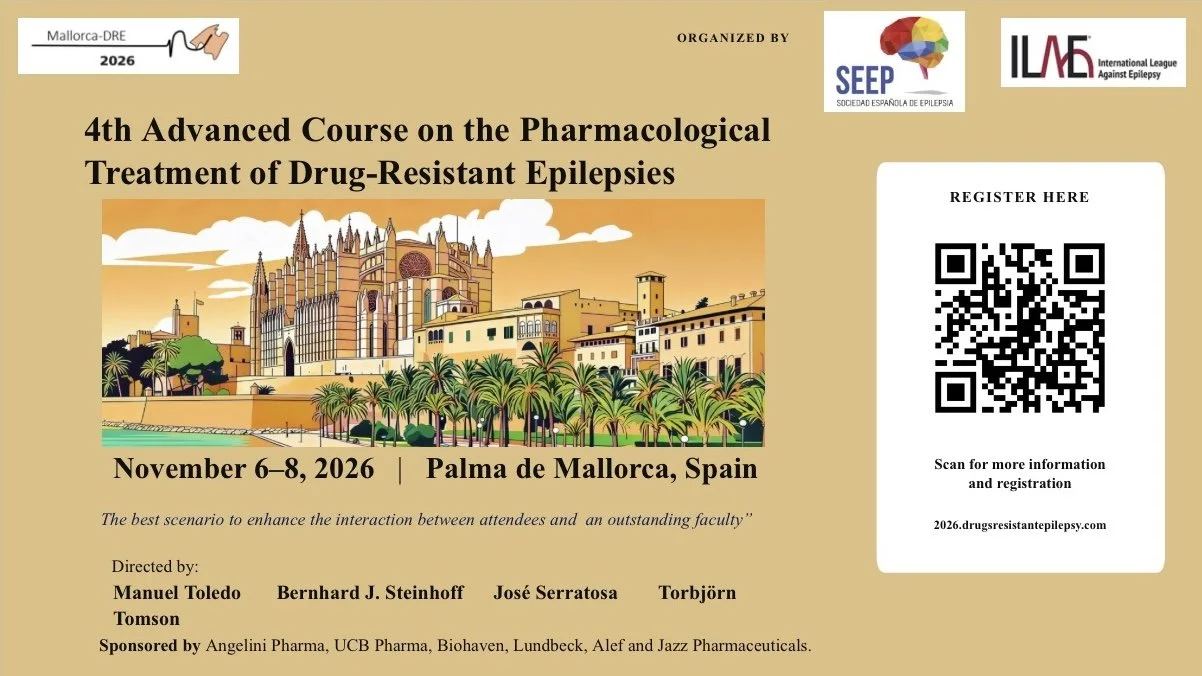
This episode is sponsored by the Drug-Resistant Epilepsy Course organised by the Spanish Epilepsy Society - supporting education and public understanding of epilepsy. Learn more about the course here: 2026.drugsresistantepilepsy.com
Episode Highlights
How epilepsy care has transformed over the past 40 years
Advances in epilepsy research, brain imaging and genetics
Safer pregnancies, medication risks and healthier babies
SUDEP risk reduction and the future of epilepsy treatment
About Torbjörn
Prof. Torbjörn Tomson is a retired epileptologist whose research has and does focus on pharmacotherapy, epidemiology, and in particular issues related to pregnancy. His main contributions include research on sudden unexpected death in epilepsy (SUDEP) and pregnancy outcomes in relation to maternal use of different antiseizure medications.
Full profile: Torbjorn-Tomson
Topics mentioned
Discoveries from epilepsy research
Women’s right to have children
Valproate debacle
SUDEP risk minimisation
-
Trailer
00:00 Torbjörn Tomson
“Probably because of all the stigma in the past, there was an unwillingness to discuss some of the dark sides of having epilepsy. You wanted to change the image of epilepsy because it was really affected by stigma and prejudice in the past. So, you wanted to highlight the normality. And you didn't want to talk too much about the dark sides. But of course, if you want to improve something, like reducing the risk of excess mortality, or reducing the risk of SUDEP, you need to talk about it. You need to know about what the risks are. You need to know about what you can do to reduce the risks.”
Intro
00:43 Torie Robinson
Just how far have we come in epilepsy care over the past few decades? Well, from ground-breaking advances in brain imaging and genetics to safer pregnancies and better understandings of epilepsy-related risks, there is heaps to celebrate! But how much further do we have to go? Well, today, we're joined by Professor Torbjörn Tomson from the Karolinska Institutet in Sweden, to hear about the extraordinary progress that he has witnessed throughout his career, his pioneering research into epilepsy and pregnancy, and why talking openly about SUDEP can actually be reassuring rather than frightening!
This episode is sponsored by the Drug-Resistant Epilepsy Course organised by the Spanish Epilepsy Society - supporting education and public understanding of epilepsy.
Meet Torbjörn
01:25 Torbjörn Tomson
My name is Torbjörn Tomson. I'm an adult neurologist, retired from clinical activities since a couple of years. But I've worked mainly during my career with people with epilepsy. And that has been my main interest. I used to work at the Karolinska hospital and [am] still at the Karolinska Institute in Stockholm, Sweden.
01:51 Torie Robinson
What changes have you noticed in epilepsy care over the past few decades through your career?
01:57 Torbjörn Tomson
It's a bit difficult to answer that and I will tell you why: because when I started working in epilepsy, I didn't have the broad overview of what was going on in epilepsy care. My only insight was in the area where I worked. And then I had the impression that epilepsy care was somehow working in isolation, separate from the other healthcare providers and healthcare system. This, I think, fortunately has changed quite dramatically over time. So, epilepsy care is now well integrated into neurology or child neurology. We've seen development where I work and in other places of multidisciplinary epilepsy teams that provide for people with epilepsy. And we've even seen international collaboration around individual cases…
02:59 Torie Robinson
Yeah!
02:59Torie Robinson
…within the EpiCARE organisation, for instance. So, from my perspective, it has been a very positive development of epilepsy care over the years.
03:12 Torie Robinson
You've been involved in so much research over your career; is there a particular study or statistic or finding that you have discovered that you think best illustrates how far we've come and potentially how far we still need to go?
Discoveries from epilepsy research
03:26 Torbjörn Tomso
I don't think any of my contributions are of that character. If I may, I would answer this differently. Looking back, I think there are 2 methodologies that have really changed our perspective and improved the way that we can provide care. And that is over the last 40 years or so. And the first one is improvement in neuroimaging; the introduction of MRI, which has helped us to identify causes of epilepsy in individual persons that we were unable to see in the past. That is a major step. The other new method, if you like, I would call genetics. And if imaging has taught us new causes of epilepsy in individual persons, genetics, more recently, has taught us about different mutations and different molecular backgrounds to epilepsy in individual patients, showing the wide variety between patients, but also opening up for, if you like, new possibilities for precision medicine. When we understand the basic mechanisms of different epilepsies, it opens up the possibility for developing new treatments that are...if we can hope for curative rather than just preventing the seizures.
06:00 Torie Robinson
I was diagnosed in 91 and even since then we've come so, so far.
05:07 Torbjörn Tomson
I agree.
05:07 Torie Robinson
Rather than just say over the last hundred years, even the most recent decades have been really impactful, I think. And even the last 20 years, or 10 years, we've noticed a real improvement in research and discoveries. They're happening more and more quickly than they used to.
05:25 Torbjörn Tomson
Absolutely, I couldn't agree more.
05:27 Torie Robinson
I know that women's health has been a huge thing for you in your career, which I'm very grateful for. What got you onto that topic? Because I wouldn't say it's necessarily a trendy thing, especially years ago. So, what led you to specifically focus on epilepsy in women?
05:41 Torbjörn Tomson
I don't think I have been a good neurologist(!) because I was more interested in treatment aspects than in, you know, localising the cause of epilepsy.
Pregnancy in women with an epilepsy - history
05:55 Torbjörn Tomson
And, I think, when it comes to treatment, the treatment of women during pregnancy is probably the most challenging one - and the most rewarding one. And that's why I got interested. And then on the background, if you again want to have a few words about the historical background. I don't know if you're aware that in the past women were prevented from marrying by law, thereby preventing pregnancies. That was the idea.
06:30 Torie Robinson
Yeah.
06:30 Torbjörn Tomson
And those bans were not lifted until or before the late 1960s. Can you believe it?
06:38 Torie Robinson
Absolutely crazy. It's pretty disgusting.
06:42 Torbjörn Tomson
This was in Scandinavian countries as well as in many other countries. They were not really applied, the laws, during the last few years, but formally they were banned only in 1968. So, I thought, you know, this was a very important thing. And now the attitude is, of course, completely different. No one would question that a woman with epilepsy can form a family and give birth to healthy children.
07:13 Torie Robinson
In the West at least, in certain countries they do still believe that they shouldn't or can't.
07:18 Torbjörn Tomson
Yeah, yeah, you're right. So, we have a mission there. But still, so it has become such an important task of epilepsy care to facilitate for women with epilepsy to have uneventful pregnancies and give birth to healthy children. I have to say that that is probably the most rewarding part (for myself) of working with people with epilepsy to follow pregnancies to see the change and what it does to the family.
07:51 Torie Robinson
And so, I'm presuming that helping the women with the epilepsy give birth, well actually have healthy pregnancies and give birth to healthy children is quite rewarding for yourself but also for the individuals and their families.
08:05 Torbjörn Tomson
Absolutely.
Fear and risk of fetal abnormalities - a reduction
08:06 Torie Robinson
Lots of people, I mean, I've spoken to around the world, women, are scared of having babies. Because they don't know of the potential risks for them, or they'll think they'll have heard things that [make them] think that risk that that person might be experiencing is exactly the same for me. And that's certainly not always the case. And they always assume all drugs are bad and that's not always the case. And also, often fear that they won't be able to look after a baby or child sufficiently. Have you come across these fears?
08:36 Torbjörn Tomson
I have, but I have to say, also, that for the vast majority of the pregnancies or the pregnant women that I've been following, most of these fears have really been gone after a successful delivery. And the fact that the self-esteem after a successful pregnancy is increased dramatically. And I think there's nothing that could compare to that. And, as you know, in most cases, the pregnancy is uneventful and the child is perfectly healthy and everything works well.
09:17 Torie Robinson
Do you think that we have a need for more neurologists or epileptologists who are confident in helping somebody have children and epilepsy nurses as well? Or are we kind of getting there, do you think?
09:28 Torbjörn Tomson
It depends on which part of the world you're talking about, of course.
09:31 Torie Robinson
Very true.
09:32 Torbjörn Tomson
If we talk about our part of the world, well, there's still some education amongst colleagues to do. But if you compare the interest in this now with how it was like 20, 25 years ago, it is so much improved.
Benefits of epilepsy pregnancy registers
09:50 Torie Robinson
And just give us a bit of the insight into your research on this. Is there anything specific that you've learnt that has proven to be of distinct benefit for women and families having children?
10:01 Torbjörn Tomson
I think what we've done with the pregnancy registers, like where the objective has been to look at different antiseizure medications (now we have so many) and compare them when it comes to risks and opportunities. And there we have identified low-risk medications where the risks do not seem to be higher than for a woman without medication. And on the other hand, we have the high-risk medications that you should avoid. We have also learned about the importance of seizure-control during pregnancy and what pregnancy does or does not do with seizure control. The message here is that if you're seizure-free before pregnancy, it's extremely likely that you will maintain your seizure control throughout pregnancy. We learned also about that there's really no need for adjusting the mode of delivery because you have epilepsy that could be done in the same way as for others. But the bottom line, I believe, is that what we learn through the work by many is that we can facilitate an uneventful pregnancy and a good outcome by planning the pregnancy, by having information well in advance. And maybe that is one of the most important messages; that pregnancies are best planned. That is the same for everyone! But I think it's more important if you are on a medication because medication can be adjusted in advance of pregnancy to be as safe and still efficient as possible.
The valproate debacle - positive changes
11:54 Torie Robinson
And worth mentioning, I think, is the sodium valproate debacle. Just for people who aren't familiar, could you just tell us what happened there and what we've done to address as much as we can the situation (not that of course we can address people who had awful experiences and children who were born with disability) - but could you give us a bit of an overview, please?
12:15 Torbjörn Tomson
Valproate was one of the 3 medications that were available for many, many years for treatment of epilepsy and it was, by some, a favoured drug because it has a very broad spectrum of efficacy. And even for some specific types of epilepsy, it is probably the most effective one. But it turned out, and this goes back like 20, 25 years at least, that the risk of malformations and the risk of poor development of the offspring was much higher with valproate than with any other antiseizure medication. And when this was discovered, and when it became obvious, the regulating authorities issued very strict restrictions on the use of valproate for women that are of childbearing potential. And we've seen, I think that is an interesting message also when we look at the pregnancy register that we have been running for now more than 25 years and look at the outcomes in terms of the proportion of pregnancies ending with an offspring with a malformation. It has gone down by 30 to 40% over time - in parallel with a shift in the use of antiseizure medications not using valproate and using some other medications instead. So clearly, there is a gain in planning the pregnancy and making sure that the woman is entering pregnancy on the optimal medication for her epilepsy and for her future baby.
Quickly as well, I know there are some studies looking at the impact on the males who contribute rather significantly to a pregnancy.
14:18 Torbjörn Tomson
That came from a study, a register-based study, looking at data from the Nordic countries, which indicated that males that had been using valproate during spermatogenesis; there was an increased risk of neurodevelopmental disorders in the children of those males. And that led to - in particular, the British regulated to again issue restrictions on male use of valproate. But subsequent studies, including from the Nordic countries and other countries, have not confirmed any increased risk associated with male use of valproate during spermatogenesis. So, I think this is very reassuring now.
15:13 Torie Robinson
Yeah, that's a really, really good point that one study does not necessarily equate to absolute determined facts. We have to replicate studies to confirm results.
15:25 Torbjörn Tomson
Absolutely.
SUDEP history, education, and risk reduction
15:26 Torie Robinson
So, secondly, a huge part of your focus (or foci) during your career has been SUDEP. Can you just tell everybody what does SUDEP stand for and what does it mean?
15:36 Torbjörn Tomson
SUDEP is an abbreviation of sudden unexpected death in epilepsy. And it's defined as a sudden death in a person with epilepsy where you have… you find no explanation for the death even if you do a very thorough post-mortem examination. This his is also interesting because there are some parallels with the pregnancy issue in terms of that the excess mortality in people with epilepsy was something that you were not supposed to discuss some 30, 40 years ago.
16:17 Torie Robinson
Why?
16:18 Torbjörn Tomson
Probably because of all the stigma in the past, there was an unwillingness to discuss some of the dark sides of having epilepsy. You wanted to change the image of epilepsy because it was really affected by stigma and prejudice in the past. So, you wanted to highlight the normality. And you didn't want to talk too much about the dark sides. But of course, if you want to improve something, like reducing the risk of excess mortality, or reducing the risk of SUDEP, you need to talk about it. You need to know about what the risks are. You need to know about what you can do to reduce the risks. I have to say that this new attitude to openness about the risk was really sparked by a UK support group at that time called Epilepsy Bereaved. I think it's now SUDEP Action.
17:20 Torie Robinson
Yep.
17:21 Torbjörn Tomson
And these were the ones that actually were pushing very hard for being open with discussions about SUDEP; the obligation to have information to patients. And this, think, has been widely accepted now. And of course, patients have the right to know. If we are not talking about it, they will read about it and they will wonder why we don't talk about it in the healthcare system. And I think this has been widely accepted now, so that the information, and I think that is the only way to reduce the risk.
17:55 Torie Robinson
Mmm.
17:55 Torbjörn Tomson
Because risks are associated with having frequent tonic-clonic seizures, having night-time tonic-clonic seizures, being non-adherent to the medication that you are prescribed. And these are factors that are possible to modify. But in order to modify them, of course, the person with epilepsy needs to know.
18:19 Torie Robinson
Yeah, or often their carer as well; not all of us have the capability intellectually or cognitively to understand these things. So, often it's the carer who needs to understand it more. And also, what's interesting from the carer's perspective, they are often, well, after somebody dies [say] that “I didn't know about SUDEP.”. That still does happen, not as much as in the past like you said, but why do you think people still don't know about it? I have my theories, but why do you think that is?
18:46 Torbjörn Tomson
In fact, I have to tell you there was actually in the Land Swedish newspaper the other day, there was a big article about a parent of a young boy that apparently had died in SUDEP. But no one had talked about it. The journalists didn't know about it. And the parents were very upset because even after an autopsy there was no finding that explained the death. So, they didn't want to bury the guy until the course of death was determined. And of course, based on what we saw in the newspapers, it must have been a SUDEP. So, there's clearly a lack of information. And I think it's to a large extent due to the colleagues in the care of people with epilepsy that are still reluctant to discuss it.
19:43 Torie Robinson
So, the comparison I often personally make is you tell kids when they are little that you teach them to cross the road and you tell them to look both ways and to listen, and… but there is a risk if you don't do that and that they might literally die. That's what we tell people. And I kind of see that similar to SUDEP. Now, of course, we can't prevent all cases, but we can minimise risk. So why do you think that we still struggle so much, often, to tell people that “This is your risk and this is how you can minimise your risk.”?
20:17 Torbjörn Tomson
The answer you get when you ask a neurologist, for instance, for the reason is that we don't want to wake anxiety unnecessarily to people with epilepsy. But I think if you give the right information, it's reassuring rather than worrying, because I think many, people or carriers of people with epilepsy do have a fear that a seizure may be fatal. And I think, in fact, the actual risk in the average person with epilepsy, if you can say that, is much lower than expected by the patient or the caregivers. So, a correct information is not, it's reassuring rather than worrying, because, I think there are studies that clearly show that as well, that information about SUDEP does not increase anxiety or other negative reactions to the information.
21:21 Torie Robinson
We really need to spread that around the world to neurologists so that they can talk to people about it. And also, I imagine, how you disclose the information to people counts, doesn't it? It's not just “By the way, you might die.” and it's “Okay, this is what you can do minimise risk.” - and also, you are at, in many cases, are at low risk because of such and such, and you will continue to be if you do such and such, you know, do you know what I mean?
21:49 Torbjörn Tomson
I do. And I think it should be part of a more comprehensive discussion about risks with epilepsy and risk minimisation, including the one that the example you had about the road and including the example of, for instance “Do not take a bath on your own.” and things like that. So, it becomes natural as part of an overall discussion about risks and risk reduction.
22:15 Torie Robinson
Just like, I suppose, I'm considering comparing in my head to talking about mental health, for instance, and people with epilepsy, we know they're much more likely to experience mental health issues or struggles. It's about bringing things up in a kind of, in a normal way, not in a scary way, just “This is what your risk might be. And this is how you can minimise risk.” at the end of the day. And also, another thing I find interesting is we are, as you say, talking about SUDEP more and more, which is fantastic. But I don't hear people talking so much about risks of death other than SUDEP because there are those risks as well. I fell on a railway line during a seizure and that was quite risky. So, what do you think about disclosing those risks as well?
23:00 Torbjörn Tomson
That's what I mean by a comprehensive discussion about risk and risk reductions. And it doesn't have to be fatal risks, It could be any type of risk.
23:11 Torie Robinson
Burns, or…
23:12 Torbjörn Tomson
It should be there and it should be a package.
Other risks to minimise
23:15 Torie Robinson
So, what are some other risks included in the package?
23:16 Torbjörn Tomson
Oh, of course, driving is there,
23:20 Torie Robinson
Mm-hmm.
23:21 Torbjörn Tomson
But that's clearly regulated. But then you have the swimming or bathing risks, which I think are important, and taking a shower instead of taking a bath. You mentioned burns, that's also important, and that is also something that you can provide protection against.
23:43 Torie Robinson
What about people who live on their own? Because not everybody has… I know people with an epilepsy (and I was one myself in the past, live on my own, had nobody to help me with any of this stuff). What can we do to help these type of people?
23:56 Torbjörn Tomson
Well, they need the same information. I mean, you need to find a balance, of course, between your wish for an independent life (which is extremely important), against the risks associated with not having someone taking care of you if you have a seizure, depending again on the severity of your epilepsy, frequency of seizures, type of seizures, etc. Some may have some help by having seizure detection devices. We do not know if the seizure detection device has actually reduced the risk of SUDEP, if that's the question, but that's very, very difficult to study. But still, having a seizure detection device which is linked to someone that can actually interfere or at least check on you is one way of helping people that live alone with epilepsy.
25:05 Torie Robinson
So, if you could select 1 thing, okay you can go for 2 things that you've learned (because I'm sure 1 is not enough!); things that you've learned over your career and how far have we come and where else do we need to go? What are improvements that still need to be made?
Shared decision-making (clinician and person with an epilepsy/carer)
25:23 Torbjörn Tomson
First answer: what I learned, I would say the concept of shared decision. That is the most important lesson I learned during my career.
25:31 Torie Robinson
You mean sharing the decision between clinician and patient/family.
25:35 Torbjörn Tomson
Correct. Shared informed decision making. Without a shared decision, how can you expect a patient to adhere to the decision?
25:45 Torie Robinson
It's gotta be their choice as well. They need to want to do it.
Hopes for the future: anti-epileptogenic treatments
25:48 Torbjörn Tomson
If you want me to say what I wish to come, it would be wonderful if we in the future could have medications that are not just symptomatic, that is holding back on the risk of seizures while you take the medication, but truly anti-epileptogenic, preventing epilepsy or modifying the course of epilepsy. We're not there yet. Maybe we will have some in the future for specific types of epilepsy where we learn about the molecular background.
26:28 Torie Robinson
I could not agree with you more on that. Rather than just treating symptoms, we want to stop the disease in its tracks. Do think we're gonna get there?
26:36 Torbjörn Tomson
I'm more optimistic now than I was, say, 5 years ago. The reason is, it goes back to where we started with the genetic studies that unravel the underlying molecular mechanisms for the different types of epilepsy. We talk about small proportions of the overall epilepsy population, but still there are developments of treatments that seem to be in the future probably disease modifying rather than just symptomatic.
27:20 Torie Robinson
So, I would say to everybody, keep your eyes open, there are potential... we have hopes in the pipeline, but also we need to manage expectations because we don't know when positive results will come out.
27:35 Torbjörn Tomson
I agree. Thank you.
Closing thoughts and thanks
27:37 Torie Robinson
A huge thank you to Torbjörn for sharing his remarkable experience and insights! It really is so encouraging for us to hear just how far we've come in supporting women with an epilepsy, understanding risks, and making care safer and more personalised! Maybe most excitingly, we're moving towards a future where treatments could address the underlying causes of certain epilepsies, rather than simply trying to control the seizures. There, we do have realistic hope! Thank you to the Drug-Resistant Epilepsy Course organised by the Spanish Epilepsy Society - for sponsoring this episode and supporting education and public understanding of epilepsy. See you next time!