
The Causes of Epilepsy - and the Future of Treatment & Prevention - Prof. José Serratosa, Hospital Universitario Fundación Jiménez Díaz, Spain
What if we could diagnose epilepsy before the first seizure, offer surgery much earlier, or treat the underlying causes rather than just control seizures? And could better organisation and AI improve epilepsy care worldwide? Hear from leading epileptologist Dr José Serratosa from Madrid, Spain, as we explore the causes of epilepsy, advances in surgery, genetics and precision medicine, and what the future could hold! Watch/listen/read here 👇!
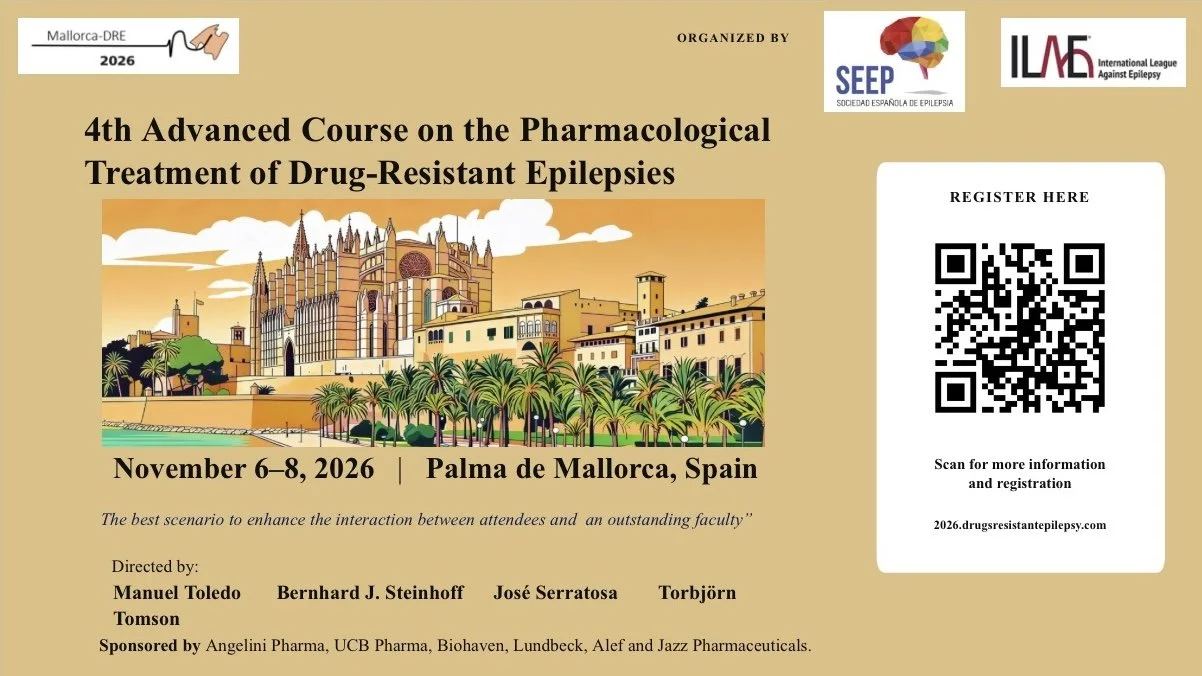
This episode is sponsored by the Drug-Resistant Epilepsy Course organised by the Spanish Epilepsy Society - supporting education and public understanding of epilepsy. Learn more about the course here: 2026.drugsresistantepilepsy.com
Episode Highlights
Why early diagnosis and treatment could improve epilepsy outcomes
The possibility of epilepsy surgery after just one seizure
The potential to identify and treat epilepsy before seizures even begin
How genetics and precision medicine could transform epilepsy treatment
About José
Prof. José M. Serratosa is a epileptologist and neurologist in Madrid. José has a strong scientific interest in the characterisation of epileptic seizures, surgical treatment of epilepsies, genetics of epilepsies, progressive myoclonic epilepsies (including Lafora disease), neuroimaging studies in epilepsies, and the mechanisms of resistance to antiseizure medications and the development of adverse effects to them. José has published numerous articles in international journals and has contributed chapters to specialised books, and in 2025, Jose was the winner of the ILAE Ambassador for Epilepsy Award.
Full profile: José Serratosa
Topics mentioned
Causes
Diagnosis
Treatment
Prevention
Surgery
Genetics
Precision medicine
Gene therapy
Inequalities
AI
-
Trailer & intro
00:00 José Serratosa
“There are hundreds of genes causing epilepsy. There are numerous types of tumours, of vascular malformation, of infectious diseases. Anything can be resulting in epilepsy if it hurts the brain. This is, in my opinion, probably caused by lower quality of health during birth and pregnancy and birth. So there is more brain injury during the early phases of development. And also, in many countries, infectious diseases is an important aetiology for epilepsy and this does not happen in high income countries. Also, I think - and a lot of people will agree with me - that the treatment during the early stages of epilepsy, at the beginning, improves a lot the outcome.”
00:58 Torie Robinson
What if we could diagnose epilepsy earlier or even prevent seizures from beginning in the first place? Today, we're joined by epileptologist Dr José Serratosa from Madrid, to hear about the importance of early diagnosis and treatment, exciting developments in epilepsy surgery, how genetics and precision medicine could transform the future of epilepsy care, and how better organisation and AI could help more people access the treatment that they truly deserve! This episode is sponsored by the Drug-Resistant Epilepsy Course organised by the Spanish Epilepsy Society - supporting education and public understanding of the epilepsies.
Meet José Serratosa
01:34 José Serratosa
Hello Torie. First of all, thanks for the invitation. It's a pleasure to be in Epilepsy Sparks and I hope I answer all the questions with the best responses for the audience. So, basically, I am an epileptologist working in an epilepsy unit in Madrid, Spain. We do all kinds of therapies and diagnostic procedures, but we are very interested in basically genetics of epilepsy and now in implementing the knowledge we have so we can reach the patient with better therapies.
02:26 Torie Robinson
And it's so important, I think, to spread that knowledge globally, isn't it?
02:30 José Serratosa
Yes.
02:31 Torie Robinson
I think traditionally it was all in little silos and you had these experts here. But now, would you agree, is it important to share this information globally with other clinicians?
02:42 José Serratosa
Well, I think now with all the applications we have to reach people all over the world, we are more connected, especially for severe epilepsies. So, for example, with one of the most severe epilepsies that we are studying and trying to treat, we have a global community that we can reach very easily all over the world and the patients can ask us questions in days after the diagnosis is made. So, I do believe we are in a much better situation than many years ago.
Why epilepsy is not a single disease
03:29 Torie Robinson
And so when people think of epilepsy - and this includes many clinicians - they think of seizures alone. Can you explain to us why epilepsy is not a single disease, at least in many cases it's not?
03:42 José Serratosa
Well, basically, we can say epilepsy is a group of diseases and it's the same with other groups of diseases. You say or we talk about cancer, talk about diabetes, we talk about asthma, and they are not 1 single disease. So, but in general we say epilepsy but we should more... say epilepsies, right. So, epilepsy is an electrical disease of the brain, is basically what it is; where we have an excess of excitative impulses. So, anything that increases the excitatory impulses of the brain can result in epilepsy. Normally we talk about epilepsy when there are repeated recurrent seizures, but you can have epilepsy after only 1 seizure. Basically, any injury to the brain; it can be a microscopic or molecular injury such as a gene mutation or it can be a very large injury such as the one produced by infections, all types of infections, you know, produced by viruses or bacteria, tumours, malformations of the brain. So, anything that hurts the brain can result in epilepsy.
Epilepsy at different ages
05:26 Torie Robinson
Which kind of leads us onto the fact that, you can develop epilepsy at any age at all.
05:29 José Serratosa
Any age is... say a probable age where a person can develop epilepsy. Children are a group of higher incidents, because it's when many genetic epilepsies start to express, right? And I would say now also, a very important group of the population is the elderly because epilepsy is very common in degenerative diseases of the brain and in vascular diseases of the brain.
06:12 Torie Robinson
For example, could you give us examples of those, please?
The many causes of epilepsy
06:14 José Serratosa
Well, it's well known that before the first symptoms of Alzheimer's disease, it's relatively frequent to have an epileptic seizure. So, a person with an epileptic seizure, let's say after the age of 65, is more prone to have Alzheimer's disease than a person that did not have a seizure.
06:50 Torie Robinson
And stroke as well, right? That's another common one as you get older.
06:52 José Serratosa
Right. If you have a seizure, you are more prone to have a stroke later in life.
07:01 Torie Robinson
Or vice versa.
07:02 José Serratosa
It's a group of population that we see more and more in the clinic. Hopefully the epilepsy in these people in these persons is very easy to treat. Normally we don't have problems treating. They respond very well.
07:22 Torie Robinson
That's good to know because I think - and this includes this podcast to a degree - we'll hear about, often, the cases of refractory epilepsy, but I think it's important that we know about 70% of people can have completely controlled seizures. And also a lot of them don't have any other symptoms at all, which is great.
07:41 José Serratosa
Going back to the number of causes of epilepsy, it's probably hundreds and hundreds. There are hundreds of genes causing epilepsy. There are numerous types of tumours, of vascular malformation, of infectious diseases. Anything can be resulting in epilepsy if it hurts the brain.
Why epilepsy rates differ around the world
08:07 Torie Robinson
Why do you think then that there are higher rates of epilepsy in low to middle income countries rather than high income countries?
08:15 José Serratosa
Yeah, and this is, in my opinion, probably caused by lower quality of health during birth and pregnancy and birth. So there is more brain injury during the early phases of development. And also, in many countries, infectious diseases is an important aetiology for epilepsy, and this does not happen in high income countries. Also, I think - and a lot of people will agree with me - that the treatment during the early stages of epilepsy, at the beginning, improves a lot the outcome. So, you have, for example, we have a weekly and many hospitals have a first seizure clinic. So, after a first seizure, most people go to the emergency room or are driven to the emergency room by the emergency services and in 1 week you are seen at the first seizure clinic, you have your EEG, you have of course your neuroimaging study and you start treatment. So early treatment is also a very important factor to, you know, decrease the number of drug-resistant epilepsies and of course this also results in social cognitive psychological problems because patients usually are controlled after the first or second antiseizure medication.
Improving access to epilepsy diagnosis and care
10:08 Torie Robinson
And also, I think worth noting, is that although we say high income countries, there are real differences in access to care and quality of care even within countries, aren't there? So, say you're in Spain or in the UK...
10:22 José Serratosa
Right.
10:22 Torie Robinson
…or US or Australia, it depends who you see. If you live in a rural area or you live in a city or if in some countries you have the ability to pay for this care.
10:34 José Serratosa
Right, we are working a lot in care pathways now in Spain and also all over the world. It's part of the IGAP plan…
10:44 Torie Robinson
What does IGAP stand for? Can you tell everyone?
10:46 José Serratosa
The IGAP is the Intersectoral Global Action Plan on Epilepsy and other neurological diseases that was organised by the World Health Organization. So that's IGAP and we are implementing, for example, in Spain the part of access to care anywhere in Spain because it's not the same to live in front like in Madrid. A lot of people live in front of a hospital with a child neurology service with an epilepsy unit than to live in the mountains 3 hours away from Madrid in a small village. But, I think, for example, in this case of access to care and organising the care pathways, it's a feature you can organise with no money. You just have to organise the flow of patients, okay. So, we've done this already for example in Madrid with the emergency seizure plan, so we have a plan for the very quick rapid treatment of emergency seizures, which is any seizure that reaches the emergency service. And it's working very well at no cost. So it's just organising everything you have.
12:24 Torie Robinson
I like that part, that part; no cost, that's important because as unromantic as it sounds, investment is a key thing to either be able to improve diagnosis and care or for each to worsen. So the fact that it's, I guess you say “free”, I mean, it requires some time implementing things…
12:45 José Serratosa
Right.
12:45 Torie Robinson
…but it's not like you have to spend 10 billion euros on the next hospital.
12:51 José Serratosa
This is an example of a plan and what we're now trying to implement in Spain is access to care, to diagnostic tests, for example, a high quality MRI or genetic testing or video-EEG early in the stages of the epilepsy process so everybody can have the same care no matter where they live. And it's also a matter of organisation.
13:25 Torie Robinson
Yeah, and also, I would say, acceptance to change. Not everybody likes changing procedures or the perception that they're not necessarily the most senior person in decision making. Would you say that's a challenge sometimes?
13:40 José Serratosa
Yes, but hopefully we have the cooperation and we'll have of the patient organisations which are more close to the, let’s say close to the political power and they are collaborating in this process. So, once you have the healthcare professionals and the patients together, for the administration and politicians to accept all of these changes is much easier.
Public awareness and education about epilepsy
14:23 Torie Robinson
I'm glad you brought up politics as much as I, and it's not an amazing topic to talk about. It's actually very important when it comes to epilepsy and basically all forms of care. So although we have some of this implemented already and we aim for this to be implemented, not just nationally, but globally. What about the understanding of the epilepsy as a whole? How does that… or a lack of understanding, how does that affect diagnosis and treatment and what can we do about that?
15:59 José Serratosa
Well, I think we should follow the example of our fellow cardiologists, for example, that are having many ads in television. They have a lot of videos in social media, a lot of educational programs, and now everybody knows about how to do a cardiorespiratory procedure to recover the heartbeat, and they have done this after many years of informing people how important it is to have a healthy heart. Unfortunately, epilepsy is not as popular as cardiovascular diseases, but I think we should try to reach all the population with, you know, we would say with a marketing strategy.
16:04 Torie Robinson
I agree. You know, it's not overly trendy, I would say, to associate medicine with marketing, but it's huge, isn't it? And also, I think, going on from what you said about cardiovascular issues, it's not just educating the general public, but it's educating people who are already affected by cardiovascular issues…
16:26 José Serratosa
Right.
16:26 Torie Robinson
…or people who are at high risk, so they feel comfortable to talk about it as well. Because I think in epilepsy, a lot of people with an epilepsy or knowing somebody with an epilepsy; they don't feel comfortable to talk about it do they?
16:39 José Serratosa
Yes, it's something that is more hidden than having a cardiovascular disease. I would compare it a little bit to cancer, also it's not comfortable to say, you know, for patients to say they are affected with cancer. But I think, in my opinion, I always say this, if I had to choose one disease, I would choose epilepsy because 70% are controlled. Mortality exists, but it's not high like in cancer. Even in the long range, it's higher than in non-epilepsy persons, but it's not comparable to heart diseases or to even diabetes…
17:35 Torie Robinson
It's less visible, isn't it? You're not losing a limb like you might in diabetes, or…
17:40 José Serratosa
Right.
17:40 Torie Robinson
…or being stuck in the bed, or you're not having a heart attack and possibly dying. It's not as visible. I also, think it's a bit like mental health (which is often part of epilepsy) these things aren't generally visible. And I do feel that we're such shallow creatures sometimes, focusing just on what we can see. We need to think of other senses as well, and…
18:03 José Serratosa
Exactly.
18:03 Torie Robinson
…interpreting a disease like epilepsy.
18:05 José Serratosa
And with the new medications, we have more and more patients, you know, performing in their lives normally and…
18:16 Torie Robinson
Getting on with it.
18:17 José Serratosa
Yes.
Improving epilepsy education for clinicians
18:18 Torie Robinson
Yeah. So What do you think, we didn't really answer this, maybe continue, so about, I think other things that influence diagnosis and treatment is the education of the clinicians themselves. Because we have lots of neurologists, for example, who… they might focus on stroke or dementia…
18:43 José Serratosa
Mm.
18:43 Torie Robinson
…or multiple sclerosis. But they can be the… often be the only person available for the person who's had some seizures or is having seizures, to see. And I think that can sometimes affect the quality of care that they get. Would you agree?
19:00 José Serratosa
Yes, and actually, what we are trying to do and we should try to do of course globally, is to have access, early access to a neurologist with some training (not as… it doesn't have to be the highest level of training in epilepsy). So, this is something also important in the care pathway programs that are being developed all over the world; that you have access to a - we would say epileptologist - as soon as possible.
Access to epilepsy surgery and delays
19:39 Torie Robinson
That'll make a huge difference. And, you know. You're making me think of the average waiting time for surgeries.
19:46 José Serratosa
Well, I think the waiting time exists from the time the patient and the doctor agree to go to surgery. I think it's 1 to 2 years maximum. In developed countries, you have to think that when epilepsy starts, I think in many studies, this is not taken into account. When epilepsy starts, you have 1 seizure and then you don’t think of surgery and then time passes and you have another one and it takes some time to, you know to realise that you are having, that the person with epilepsy is having, a drug-resistant epilepsy. I think it's the waiting time is not so long. It could be 1 or 2 years from the time the patient and the doctors are ready. Also the patient needs some time to process surgery. It's not like, well, you have this epilepsy and go to surgery. A lot of patients, I think especially in Europe, don't necessarily want surgery. I would say 50% of the patients we offer surgery to don't want surgery.
21:07 Torie Robinson
Is that because it's quite scary, do you think? Or the idea that they might not understand it completely, and that might be why they're anti it?
Advances in epilepsy surgery - operating earlier
21:15 José Serratosa
Now with new technologies such as laser ablation and others, it's probably, you know, easier, but even with less invasive options, patients like to think about it. Most patients like to think about it for months or years. Another issue that I think is important with respect to surgery and this was talked [about] during symposiums in the recent European Congress on epilepsies: early surgery after the first seizure.
21:53 Torie Robinson
After 1 seizure or 2 seizures?
21:55 José Serratosa
One.
21:55 Torie Robinson
…or - why 1? Because often we'll hear the diagnosis of epilepsy requires 2 seizures within a certain space of time.
22:02 José Serratosa
A factor can be an EEG or a lesion on MRI that suggests a high recurrency risk. So if you have, for example, cavernoma, in the easy accessible area of the brain and just 1 seizure, we are now offering the patients the option of surgery after the first seizure.
22:32 Torie Robinson
Oh wow!
22:34 José Serratosa
And this is something that has been published and it goes very well because after 1 seizure there is usually no cognitive, no psychological, no social problems induced, and also because if you do early surgery… you stop the epileptogenic process very early.
23:01 Torie Robinson
Yeah, my goodness. Yeah.
23:04 José Serratosa
So, you, let’s say you stop…
23:07 Torie Robinson
Yeah, you stop it basically from getting worse, don't you? I can say as a person who's had surgery and from diagnosis to surgery was it was 20 years, over 20 years. And this is a problem and which is very common, isn't it? And over that time, I know that I was effectively losing cognitive ability…
23:30 José Serratosa
Right.
23:30 Torie Robinson
…and my mental health was getting worse. And, you know, and of course, the risk of SUDEP was increasing. The risk of physical injury was… well, I was having more and more physical injuries and so all these different things and… So, I completely understand what you're saying from the perspective of somebody with epilepsy and I wish that I'd had the opportunity to have it a lot earlier. Also, when your…
23:51 José Serratosa
Right.
23:51 Torie Robinson
…brain is younger and more malleable - that's another thing isn't it. And also often with surgery especially these days you can often really reduce your medication or sometimes even stop it. So anyone would rather reducing [sic] medication that they're taking over decades or even their whole life, I think.
24:12 José Serratosa
Exactly. If you let the epilepsy, you know, evolve and you wait many years and the patient already has had many seizures, you can have also a network of epileptic areas of the brain that are involved and then even if you do surgery of the lesion or the area around the lesion you can have other areas that are already epileptogenic and can you know result in seizures after surgery.
24:56 Torie Robinson
So it's almost like the epileptogenic zone spreads. So you would kind of even need to remove, if you were having surgery, more brain tissue 20 years on than you would have done after the first seizure. Is that what you're saying, yeah?
25:07 José Serratosa
Exactly, right. But this is especially, you know, indicated, or it should be thought about where… when you find the structural lesion after the first studies.
25:22 Torie Robinson
Yeah.
25:22 José Serratosa
So, if the lesion is in an easily accessible place for surgery and it's not affecting areas of language or movement then I think it's a good option.
25:41 Torie Robinson
Yeah I suppose it's worth saying also it's not suitable for everybody for multiple reasons and you've just implied that it could be if you have some tissue removed it might have an awful impact on something else but having said that you know we look over the past just 5-10 years we've become so much more able to be more precise in tissue that is removed, aren't we.
26:02 José Serratosa
Exactly.
26:02 Torie Robinson
So you don't have to just get a spoon and scoop out the whole lot. Like we mentioned laser ablation for instance, which isn't available everywhere.
26:10 José Serratosa
Some of these sophisticated procedures like stereo-EEG and laser ablation are really expensive, yes.
26:18 Torie Robinson
MEG.
26:22 Torie Robinson
Yeah, and that's where, yeah, money comes in again… But let's just slip it right in; we were talking about this before, if you can help people affected by epilepsy earlier on you're going to save the government money so...
26:26 José Serratosa
Yes, because surgery in early stages is also much simpler, easier, has less complications.
Genetics and precision medicine in epilepsy
26:48 Torie Robinson
Exactly. And less of an impact on society as a whole, I think. So tell us about advances in genetics over the past, I don't know, 5 - 10 years and precision medicine. What is precision medicine? Why is it important? And how does that relate to genetic epilepsies?
27:06 José Serratosa
Well, in my opinion - and in there are several definitions of precision medicine - but precision medicine is usually referred to as the medicine where the therapy, the treatment, is directed at the precise mechanistic problem causing the epilepsy. For example, gene therapy is precision medicine because you try to fix the genetic problem. Some small molecules also target precise mechanisms that are causing the disease. For example, in specific encephalopathy such as KCN2A, we use fampridine to lower the activity of the potassium channel when there is a gain of function. So all of these types of medicines are precision medicine, course, antisense oligonucleotides, which are, you know, being tested now for several types of encephalopathies are important. They are not so expensive in the short term. So like per year, at the beginning, the treatment is not so expensive as gene therapy, which is very expensive.
28:52 Torie Robinson
At least at the moment it is. I'm hoping that it might not be as expensive the more we invest in, I don't know, what would one call it? Like when you do it more in bulk, things get cheaper, don't they? And I think so many people could benefit from it.
29:06 José Serratosa
The problem with all of these therapies is that you need to produce in a, let's say a factory, the vectors for gene therapy and the antisense oligonucleotides for antisense therapy. And also of course, the development is very expensive, but specifically for very precision type of medicines, it's the production of the therapy, which is extremely expensive. But we should go towards this area of precision medicine, but only, of course, in epilepsies where there is a precise mechanism.
29:58 Torie Robinson
Yeah, that we know of.
30:00 José Serratosa
Right. In many, in the case of many types of epilepsies, the cause is multifactorial. It's not one factor.
Understanding the multiple causes of epilepsy
30:08 Torie Robinson
Yeah, a lot of people don't realise that. They'll think it might be just say, might just be traumatic brain injury, or it might, like I know somebody who has a genetic epilepsy and there was no seizure onset until her 30s. You know, and or it could be something that makes you might be born with something that makes you more vulnerable to an epilepsy later on in life. So there can be multiple, like.. give us an example of a multifactorial epilepsy.
30:33 José Serratosa
You can have, for example, a traumatic brain injury, as you mentioned. It was many years studied in different groups of patients, and there are families where brain trauma results in epilepsy and families that we would say are protected against epilepsy where traumatic brain injury does not result in epilepsy. It's the brain injury of trauma, but also the genetic background. It can be other, we would say, random reasons such as how the brain was formed during development. So, even in genetic epilepsies, the majority are polygenic. So they are caused by the combination of alterations or variations in different genes.
31:42 Torie Robinson
You know what, you've made me think of something. There was a study of identical twins - “identical” - and they both had an epilepsy, but one experienced… the symptoms were so much more severe than the other, right? And so, you know, I don't know if “identical” is the right word for twins, because it just shows us how different things can be depending on, you know, like you say, multiple genes or how an environment affects somebody as well.
32:13 José Serratosa
Exactly. So for a precision medicine to be implemented, you need a precision aetiology or cause of the epilepsy. If you have several causes, then you can't use precision medicine or therapies.
The future of epilepsy treatment and prevention
32:38 Torie Robinson
Yet, yet, who knows? Well, what do you think then the next 5 to 10 years holds when it comes to the epilepsy? Do you think things are gonna improve? If so, how?
32:49 José Serratosa
Well, over the years we've seen improvements especially in the quality and quantity of antiseizure drugs. So we have much better drugs. They are more effective to control seizures and they have less side-effects and less problems. So, I think we will continue seeing new drugs develop and come into the market that are probably going to add, you know, patients to the seizure-free group. What I expect also is some genetic therapies to come into the market for especially rare epilepsies, mostly epileptic encephalopathy and progressive myoclonus epilepsies. But this will be hard to implement at a global level because of the expense. And also, we hopefully will move towards early detection of epilepsy, not only drug-resistant epilepsy. So we want to detect earlier epilepsy, even before the first seizure…
34:21 Torie Robinson
Yeah!
34:21 José Serratosa
…so we can treat patients before the epilepsy and the other problems that are coming along with epilepsy, you know, progress.
34:34 Torie Robinson
I would love that so much.
34:35 José Serratosa
This will be especially important in the genetic epilepsies.
34:40 Torie Robinson
Do you think that we're going to have more genetic epilepsies identified? Because I think a lot of the epilepsies we think today are just solely down to something like physical injury, but we're identifying more and more genes, aren't we? So do you think that's going to happen and that will help treatment and care?
34:55 José Serratosa
Well, the problem with all these genes is that each gene would need a specific therapy, a specific precision therapy.
35:08 Torie Robinson
Hmm.
35:90 José Serratosa
And still at this moment, this is not easy to implement without a huge investment. We are not sure how this will develop, but I think it's important to think that the model of investment to recover the money that has been invested is not going to work for rare diseases. There will have to be some, you know, health process not paid by drug companies where these therapies will be developed without thinking of the recovery of the investment. Because there is no recovery for epilepsy where there is 1 patient per country, let's say.
36:10 Torie Robinson
Yeah, yeah.
How AI could improve epilepsy care
36:11 José Serratosa
So there's already people working on this, trying to build facilities where therapies can be developed for many genetic epilepsies, personalised. And then I hope that in the next years we will have more automations of different processes that, you know, make us, especially the doctors, lose a lot of waste, a lot of time. So we spend a lot of time with the computers, you know, doing different…
36:59 Torie Robinson
Admin.
37:01 José Serratosa
…you know, tasks that can be done by any artificial intelligence, but for some reason, I'm not sure which reasons are, this is not being implemented now. So as much as everybody can get a bit scared of AI, actually, there are simple ways to use it that could save you time as a clinician and give more time that you spend with the person with the epilepsy or the caregiver and understand their situation better and then you can help treat them better.
37:37 José Serratosa
Exactly. So I would expect to see this in the next 10 years to be very well developed. For example, now there is a program. It doesn't have to be an AI, you know, algorithm. It can be developed with the help of AI but it can be a closed, already fixed, program that reads EEGs.
38:07 Torie Robinson
Right, yes, yes.
38:07 José Serratosa
So this is already something being used, starting, but it saves a lot of time. At the end you are just reading, you know, curves and waves. So this can be easily done by a computer and then you can just, you know review the parts that are informative and validate what the program has seen.
38:40 Torie Robinson
Mm.
38:40 José Serratosa
So this would save lots of time for example in video EEG for reading recordings.
38:47 Torie Robinson
Yeah, there's only so much time we have. And although I think we like to classify ourselves as some people would say “the most intelligent species” on paper, but we miss so much when it comes to EEGs or misinterpretation of EEGs.
39:01 José Serratosa
Right.
39:01 Torie Robinson
And so being able to use the AI to first of all have a look at it and provide, you know, interpretation. Then you have the human come in and say “Oh, okay, that's what you meant.” And, and then, you know they can sometimes contradict what the AI says, but also actually realise that they were wrong about their interpretation.
39:20 José Serratosa
Of course, all of these procedures have to be validated and approved by different agencies in different countries, depending on which country. So you do have to validate and check, see that it works, but it's already being done, for example, for EEG.
39:43 Torie Robinson
Yeah, I think lots of people with an epilepsy don't realise this and that for instance their EEG may have been looked at by way more clinicians or AI than they realise and that's why they're able to get the treatment that they are getting. So, yeah, that's great so things are going to get better. Well thank you so much José, it's lovely to chat to you
40:02 José Serratosa
Thank you.
40:02 Torie Robinson
…as always. No doubt we'll see you again at some point so thank you so much.
40:08 José Serratosa
Thank you very much. It was a pleasure.
Closing thoughts and thanks
40:10 Torie Robinson
A huge thanks to José for a fascinating and forward-looking chat! Imagine a future where we identify epilepsy before the first seizure, we offer surgery much earlier (when appropriate), and we develop treatments that target the underlying causes of genetic epilepsies! There's so much potential ahead, and every person deserves the opportunity to benefit from it! Thank you to the Drug-Resistant Epilepsy Course organised by the Spanish Epilepsy Society - for sponsoring this episode and supporting education and public understanding of epilepsies. See you next time!