
Unlocking the Power of the Ketogenic Diet in Epilepsy Treatment - Dr. Neha Kaul, Monash University, Australia
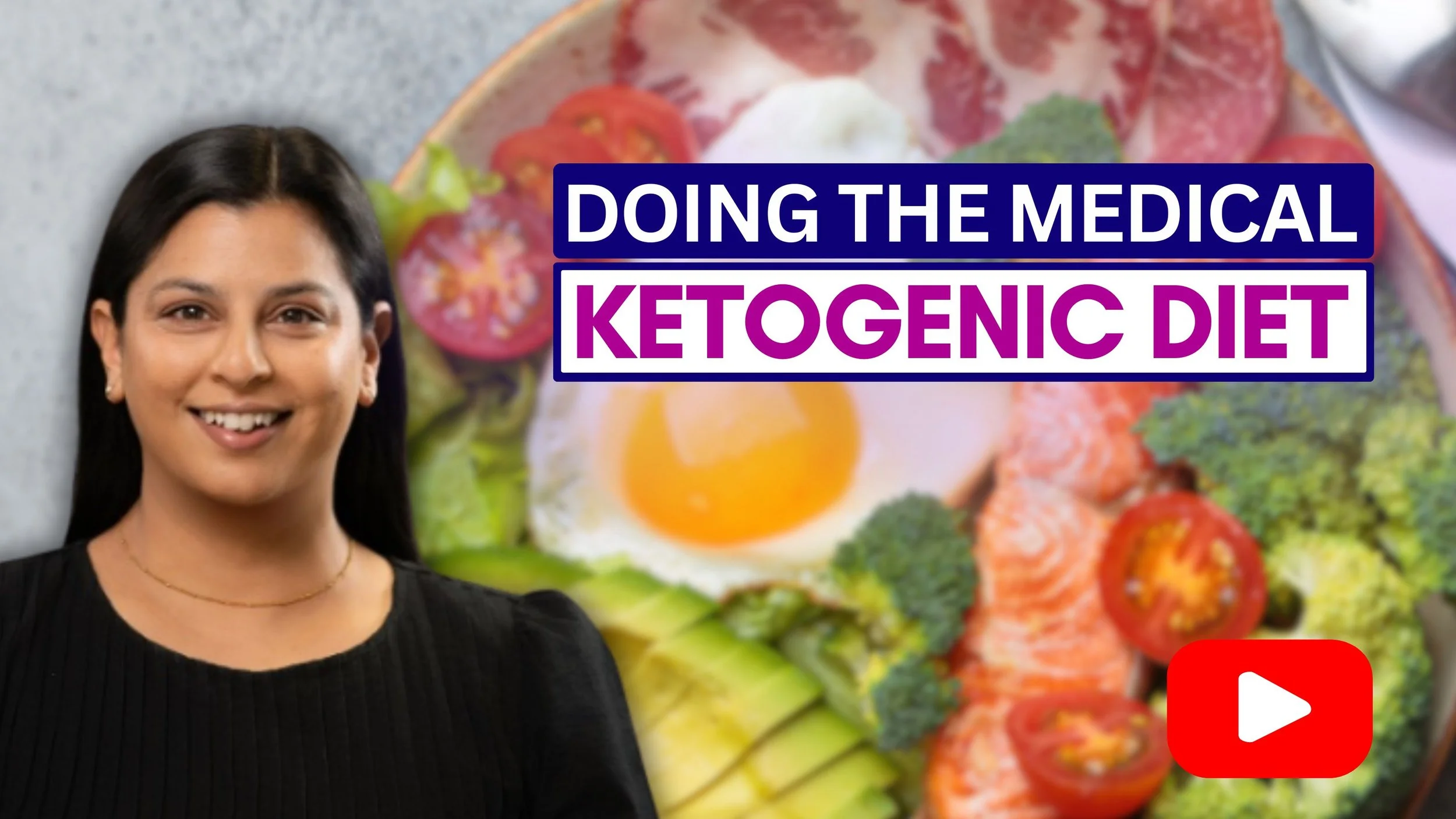
Medical ketogenic therapy has more than 100 years of evidence behind it - so why is it still often treated as a last resort?! Ketogenic dietitian Neha Kaul explains how success can go beyond potential seizure reduction, and how the diet may affect cognition, mood and overall quality of life. Neha also covers common misconceptions, safety concerns, and what it really takes to make the diet work in everyday life. Watch/listen here 👇!
This episode is sponsored by Kanso, a brand by Dr. Schär who’s had no influence over the editorial content or discussion. Learn more about Kanso here.

Episode Highlights
Mechanisms of ketogenic diet in epilepsy
Patient selection and candidacy for keto therapy
Safety concerns and monitoring in ketogenic diet
Impact of diet on cognition, mood, and quality of life
About Dr. Neha Kaul
Neha is an Senior Dietitian and Research Fellow at Monash University, Australia, specialising in ketogenic therapy for adults with a refractory epilepsy.
Full profile: Neha Kaul
Topics mentioned
ketogenic diet
modified ketogenic diet
seizure control
metabolism
glycemic index
cholesterol
quality of life
cognition
obesity
-
Trailer
“There's a few specific syndromes that respond really well to the ketogenic diet. So specifically Glucose Transporter [Type] 1 (GLUT1) Deficiency Syndrome [(GLUT1)] and Pyruvate Dehydrogenase Deficiency Syndrome. But more broadly, I think anyone with a drug resistant epilepsy should be considered for advanced therapies, so that's things like surgery evaluation, neuromodulation and ketogenic therapy. So, when we speak in broad terms, in terms of eligibility or suitability, it's actually anyone with a drug resistant epilepsy!”
Intro
00:33 Torie Robinson
Welcome to Epilepsy Sparks Insights! I’m your host, Torie Robinson, and today I’m joined by ketogenic dietitian Neha Kaul, who in the first of 3 episodes about medical ketogenic therapy will share with us what it really looks like in modern epilepsy care - from figuring out who’s suitable, having a multidisciplinary team, and why access to experienced ketogenic teams is still such a huge barrier. We’re going to go into why ketogenic therapy is still sometimes misunderstood or treated as a “last resort” option (despite decades(!) of evidence supporting its use in drug-resistant epilepsy!), what it’s really like in real life to implement ketogenic therapy and how clinicians can support people to stick with the diet long-term (ie permanently!). We are also going to talk about the emotional and social burden of the diet, safety concerns, and why treatment “success” might involve far more than seizure reduction!!
If you’re new here, please subscribe so you don’t miss future conversations - and let’s get into today’s episode - presented in partnership with Kanso, by Dr. Schär.
Why is the ketogenic diet not widely used?
01:38 Torie Robinson
Now despite decades of evidence, ketogenic therapy is still sometimes viewed as like a “fringe” potential treatment or a last resort. And it sounds a bit crazy to me, but why do you think that this perception persists in mainstream neurology?
01:55 Neha Kaul
Yeah, I think it's still interesting to think that it is seen as “fringe” or “alternative” medicine when we now have over a hundred years of evidence saying that we can use it in the treatment of epilepsy. And I think, partly, it might be just due to lack of access. So, if you haven't been exposed to using the ketogenic diet before, you don't have a dietitian to refer to, you've never seen the diet in action, I guess it's probably not on the forefront of what you're thinking about when you're thinking about using it as a treatment.
02:27 Torie Robinson
Are you talking from the perspective of clinicians or patients or both?
02:31 Neha Kaul
Possibly both. I think, certainly patients bring it up with their neurologist, I think because they hear about the diet, they hear that it's got all this evidence, and then they might have a discussion. But it might just end there because they have nowhere else to actually refer the person on to (which is one of the issues). And also, I think there is still a real perception that the diet is just too hard! It's just not worth even starting. And I think the actual biggest barrier is getting people to actually see a dietitian who has experience in ketogenic diet so that they can actually ask all their questions and hear about what the diet's actually going to be like for them.
03:10 Torie Robinson
And I think also working yourself and working with that clinician they already have with their pre-existing neurologist or epileptologist as a multidisciplinary team to… and presenting that to the patient or the family as well so that they kind of have that confidence and guidance from both at the same time.
03:27 Neha Kaul
Yeah, I think certainly being within one team is really important. I think if you have to refer on to another service, then you get some really disjointed care. And it's sort of like, “Oh, my nutrition care is somewhere, and my neurologist is somewhere, and my general practitioner is somewhere else.”; all of a sudden, when it's really hard to keep all that communication flowing. I'm very lucky to work in a multidisciplinary service where we see the patients together. So it's me and the neurologist, our appointments are together, and so we can troubleshoot any issues or address any questions together.
Research: supporting people trying the ketogenic diet
04:02 Neha Kaul
My research is really around how we best support patients who try the ketogenic diet. So what are the tools that we need, how do we actually move forward with the implementation? So we're looking at different digital health technologies (so how we use technology to help with dietary treatment) and it's been a really nice process to actually collaborate with people living with epilepsy in the design of our research. So this is all informed by people who've tried the diet or who are thinking about the diet, and what they would need. We include people who… and their caregivers (if they'd like to include them), so they can access the same digital technologies that we provide to the participants, because we know that there's a proportion of people that will need help with the diet.
What is ketosis?
04:48 Torie Robinson
When it comes to, like… what even is ketosis? So there are multiple competing hypotheses: ketones as signalling molecules, neurotransmitter effects, metabolic stabilisation… Which mechanistic explanations feel most consistent with both evidence and clinical observation?
05:07 Neha Kaul
Yeah, I think that we say that these are “competing” hypotheses, but actually they're probably complementary mechanisms! The diet causes a number of changes within the brain, but also within the rest of the body. So we can't see diet in isolation. For a long time we thought that it's the ketones themselves, the central mechanism of the mode of action. But these ketones, like you mentioned, have many, many effects in hormone signalling, in neurotransmission. But really, one of the main reasons we think the diet works is this energy restoration. So, the ketones provide this fuel for the neurons that they can now efficiently provide energy. But, as times move forward, I think we've seen some other reasons why we think that the diet works. For example, we have now the low glycaemic index diet (which is one of the suite of treatments in ketogenic diets!) and that doesn't often cause ketosis, but we still see people who have reduction in seizures. So perhaps it's the other side of the coin; this glucose reduction or carbohydrate reduction, as well as high fat intake! So we've got to look at both sides when we think about keto. We also know by reducing your carbohydrate intake that there's a reduction in circulating glucose levels, a reduction in insulin, and that these may also play a part in seizure reduction. But, I think what's most interesting is that it's probably not one mechanism alone, it's this combination of factors when the body is forced to switch its main fuel source. The best resource about the ketogenic diet and the mechanisms of action is actually in a book. There's a book chapter on mechanisms of ketogenic diet in Jasper's Basics of Epilepsies, and that's available online.
07:10 Torie Robinson
Terrific. All right, for everyone listening, will put a link to that in the description below so you can check that out.
Other benefits of ketogenic diet
07:15 Torie Robinson
Now, so, people often understandably, especially based on history and general knowledge, when we think about the ketogenic diet and people with epilepsy, we think about seizure control. But, I think clinicians often just focus on that and sometimes miss out the other meaningful effects that you often see resulting from the keto diet, like things like cognition, alertness, people's mood, behaviour and just functioning really.
07:43 Neha Kaul
I think that these are really important points; that epilepsy is a condition beyond seizures and we need to see beyond that. And I think this is where ketogenic diet can really lend itself as an effective treatment. There've been some really nice studies (mainly through Europe), looking at specifically behaviour and mood in children, and that we see that ketogenic therapy can improve things like attention, comprehension, and mood, reduce anxiety. And these are really consistent across the studies. Often these benefits are independent to seizure control. So, you would think that a reduction in seizure frequency is the reason that there's improvements in mood or cognition, but that's actually not the case when it comes to dietary treatment. So, I think what's most important when we're evaluating ketogenic therapy treatment is what is most important to the patient! So if they start the diet and they see an improvement, we need to think about improvement, not just looking at seizures but other reasons. And I do have patients that stay on the diet despite it not helping with seizure control.
Ketogenic diet for adults - research
08:58 Torie Robinson
What about research into adults on the diet? Because you referred to kids, but do you know if there are any studies into the impact on adults?
09:05 Neha Kaul
This hasn't been well studied. I think the research in adults has been really limited. There are good efficacy studies which show (in terms of seizure frequency) that it certainly improves the same amount. So about 50% of people that try the diet see their seizures reduced by half and about 10 to 15% become seizure free. So that's pretty consistent. But I don't think that there's been a lot of research into some of these other benefits.
Who’s suitable for the diet?
09:34 Torie Robinson
How do you define a “good candidate” for somebody for the ketogenic diet? Because we get heaps of people with an epilepsy who are just like “I'd rather be on the keto diet rather than be on these drugs.” or something like that. But we just know that things aren't that simple. So can you just like give us a bit of insight into what makes a good candidate for the keto diet?
09:54 Neha Kaul
There's a few specific syndromes that respond really well to the ketogenic diet. So specifically Glucose Transporter [Type] 1 (GLUT1) Deficiency Syndrome [(GLUT1)] and Pyruvate Dehydrogenase Deficiency Syndrome. But more broadly, I think anyone with a drug resistant epilepsy should be considered for advanced therapies. So that's things like surgery evaluation, neuromodulation and ketogenic therapy. So, when we speak in broad terms, in terms of eligibility or suitability, it's actually anyone with a drug resistant epilepsy! But, there is a perception that we need to have certain features for “success”. And I think that is where we, that individualised counselling is really important. You know, I've reflected on my practice over the years and I think it can be very easy to say “This person just won't be able to do the diet.”, but that's actually not for me to decide! I'm here to support the person and their family, and I think that sometimes it just takes slower steps.
Willingness to do the ketogenic diet
11:04 Neha Kaul
So, I think one of the most important things is that someone is willing to try the diet. So, their willingness (we can't force someone to do it!). And then really trying to adapt it into their lifestyle. So, what are the things… you know, some people just want to go straight in. They're like “I'm going to start this, you know, once I've had all my blood tests done, you give me the green light, I'm ready to go, you know, I've already been looking at labels. I've already been planning my meals.”, like, they're really motivated and I think it's important that we match their motivation and go with them. But there are other patients that are a bit hesitant. And I think that that's understandable. It's a huge undertaking. Look, there are some things that can help success and that is things like enough support. And what I mean by that is not just support in terms of cooking and planning meals, but also support like, you know, not making comments like “I couldn't do that” or “I wouldn't eat that” or, you know, “That looks terrible” or “Don't you miss having a chocolate cake?”
12:06 Torie Robinson
God, torture me if you said that, haha!
12:09 Neha Kaul
Yeah! I hear unfortunately some pretty, you know, pretty awful situations. And, you know, we wouldn't say that to someone who had an allergy! You know, for some reason, there's this real framing around the ketogenic diet that… and particularly when it's a very clear medical indication, that all of a sudden, everyone's got an opinion. And it's hard to block out!
Confusion re the diet
12:37 Torie Robinson
Ddo you ever find any confusion, at least initially from people, because, we'll here of, like, these funny versions of the ketogenic diet that people might do… if they're… I don't know, there's celebrities that want to achieve something else… it's nothing to do with epilepsy. Do you come across that at all?
12:53 Neha Kaul
Yeah, I think that that's really common. People have a preconception or even a misconception about the diet. And I think that's why it's important that we have that initial consultation. So, really to just talk through what their ideas are, even if they're just general ideas about food in general, I think your baseline attitude towards food, food knowledge, food preparation.
13:18 Torie Robinson
I've seen some amazing photos of you with this food in front of you, like these beautiful salads and people don't really think of when they think of keto so I think it's quite interesting right?
13:27 Neha Kaul
Yeah, I think people just think “I have to eat bacon, butter, eggs and cheese and that's what I have to live on.”. But it's actually, you know, there is a lot of variety that you can have. I like to think about the things you can have rather than all the things that you can't! But we can't discount that it is a difficult diet to follow. So I don't want to downplay that at all. But I think we shouldn't just dismiss it because we think it's just going to be too hard…
13:48 Torie Robinson
Exactly.
13:59 Neha Kaul
…but the person hasn't actually had all the information.
Who responds well to the diet?
14:01 Torie Robinson
Also, when you're first meeting somebody, or even before that, people, like you said, will think “I can't do this!” How do you predict whether somebody is gonna be able to stick to it, and if they're gonna be a good responder to the diet? And can you?!
14:15 Neha Kaul
I wish I had the magic bullet! Yeah, I was like, I wish I had a crystal ball to know. Because, you know, we do know that the responder rate is 50%. So we don't know in which 50% the person will be in. But, having said that, even in the 50% without seizure reduction, there may be other benefits. So, you know, it's not to say that the statistics are low for success. I think… prediction… I think we need to have more research about this, about who are the more likely to respond. And that's important so that we can offer the diet early. Even though drug resistance may be established early after someone's diagnosis, particularly for adults, I see them and people have been living with epilepsy for 10 or 20 years and been on four, five, six medications before diets even mentioned.
15:15 Torie Robinson
It’s nuts isn't it?
15:16 Neha Kaul
Yeah, yeah, it does have that real “last resort” feel. And the problem with that also is, I guess, the person's expectations, they're like “If I fail the diet, so to speak, then that's it.”.
Mistakes with the diet are normal
15:32 Torie Robinson
If somebody does appear to you or… I say I don't even like that word “failed” because it's not a person is not failing, right? It's [that] something's not working. But how do you figure out sometimes why it's not working? Because sometimes it might be that people aren't adhering to the diet properly. That could be the case, right? Or it could be some other mechanism within them that's like faffing about with everything. We all think that we know what's in a product, but we don't have any idea, or we’re misled. How do you figure out exactly why things aren't working?
16:05 Neha Kaul
Yeah, I can feel like a bit of a detective sometimes!
16:07 Torie Robinson
Oh, I bet!
16:08 Neha Kaul
Both me and the patient! We look through, and, you know, it does take a lot of commitment on the diet. So you're planning the diet, you're shopping, cooking, weighing food, testing ketones, keeping diaries. There's a lot to it. So, I think when we ask patients to keep records like this, we should make sure that we're using them effectively in our clinic visits. So, sometimes I'll ask patients to keep like a really strict record that we can try and really pinpoint where the problem might lie. Sometimes it can be a calculation error or just a mis-estimation of a certain food item. So, going back to some of the basics around weighing and just checking how they're doing that at home, checking they’re correctly testing their ketone levels, that the monitor is in date, the strips are in date, their technique is good, just double checking those things that they're not getting a false reading. And then also thinking about sometimes simplifying the diet. So, although we love variety, when there's too much variation, and then some of these inaccuracies come through, perhaps actually just scaling back the diet a little bit to make it bit more simple for a short period of time where you feel very confident that you know the nutrition information of what you're having, to really feel satisfied that they've tried the diet to its full effect.
17:51 Torie Robinson
Isn't it almost half expected, I would imagine, that people aren't going to get it right straight away, right? It's a big deal. And then you're going to make mistakes, all these, you know, taking ketones, it's all new to most people. And it's a new process that involves a lot of work, especially initially, you're learning so much; new ways to do things. And then the food just like seems like the extra bit sometimes, haha!
18:17 Neha Kaul
Haha!
18:17 Torie Robinson
Haha! So it's all the work that goes into consuming this thing! So yeah, no, I think that that's really important because I've spoken to heaps of people who say, “I've tried keto, but I can't do it.” And so, well “Did you have the support you needed?”. But then that's another story about having enough people around to support patients. So that's something else.
Safety concerns - cholesterol and nutrient deficiencies?
18:38 Torie Robinson
Coming kind of on to safety, are there any safety concerns that are evidence-based? The most famous one is high cholesterol, right? But you know, we have lipids, growth, bone health even. Do people get enough nutrition from the ketogenic diet or could they? And is this all misunderstood much of the time?
18:59 Neha Kaul
So, certainly with children on more strict versions of the ketogenic diet; they're the ones that are most at risk of developing these side effects and complications of the diet. I think things have really changed, particularly over the last 10 years, that we now have more liberal forms of the diet. So modified ketogenic diet, modified Atkins, and these, because they're more liberal, have more foods in them; what we see is actually less of these complications now, which is, think, really pleasing. And not just the reduction in complications, but no difference in efficacy. So it's not like you're doing a lesser diet and you get less effect. We always thought the more strict diet…
19:44 Torie Robinson
Yeah!
19:44 Neha Kaul
…the better effect, but that's actually not the case. So what we know now is that these age-appropriate, we call them “age-appropriate ketogenic diet”...
19:55 Torie Robinson
Sounds like you're trying to buy a video online or something. Hahaha.
19:58 Neha Kaul
Yeah, hahaha, exactly. But, yeah, selecting a more liberal diet may mean that you don't experience these side effects. The cholesterol question is still up for debate. I think this is probably the most contentious one out there. It's because if we've got adults who are trying the ketogenic diet, they may have already have cardiovascular disease or risk factors for cardiovascular disease.
20:26 Torie Robinson
Because cardiovascular disease is actually more common in people with an epilepsy anyway, isn't it, for multiple factors. So that I imagine that could be the case much of the time?
20:34 Neha Kaul
You're right. So we've got someone who is already predisposed or may have already developed a risk factor for cardiovascular disease. And then it's hard to know what is natural progression and what is being accelerated by the keto diet. So, the key thing is that people are being monitored. So, that's what I'm, you know, really tell people about. If you're going to do the diet, then you need to commit to the monitoring tests. And in adults, I don't think we see as many of these complications as we do in kids. Our bones have already developed, we've already grown, and maybe the more extreme versions of the diet; things like kidney stones, that's probably the other main side effect that we see, are really only seen at in the more classical ketogenic diet, people that are on the diet for more than two years, may be at risk. But, I think the key that I found at least is that if you're looking for it then and preventing it, that's the key. So, we should be making sure people are having these regular tests to make sure that they don't develop these complications down the track.In terms of micronutrient deficiencies, this is actually a really interesting one for me as a dietitian, of course!
22:04 Torie Robinson
Of course!
22:04 Neha Kaul
But again, with these more liberal diets, with a modified ketogenic diet, you actually might be able to meet all your micronutrients on that diet. So certainly with classical ketogenic diet, they will need extra vitamins and minerals. But with some of these more liberalised forms, then when we actually check against the nutrient reference values, we find actually people aren't deficient. So, yeah, I think this has also been a really good positive.
How much fat, protein, and carbs should be consumed?
22:37 Torie Robinson
And with these more liberal versions of the ketogenic diet, what percentage fat may they be?
22:42 Neha Kaul
Yeah, so anything upwards of 60%...
22:45 Torie Robinson
That's way lower than I thought! That's so cool.
22:47 Neha Kaul
So modified Atkins diet, for example, is about 60% fat and a bit higher protein (so 30% protein, 10% carbohydrate). And then we have the modified ketogenic diet, which is about 75% fat. The little bit of difference in that though is often modified Atkins is a little bit calorie restricted because the idea is that we're promoting weight loss.
23:14 Torie Robinson
And that's not the idea with this.
23:15 Neha Kaul
No, so in people who where weight loss is one of their goals, I might use the modified Atkins diet because your… it fits into both their epilepsy treatment and their own personal goals. But the reduction in fat that you're eating is then the weight that you're losing. So that's why they're a little bit different in terms of proportion.
Interactions with medications
23:39 Torie Robinson
Do you see… have you come across in your research or your readings, because I know you're an avid reader, obviously, in your position, links between the ketogenic diet and antiseizure medications or indeed other medications that people with an epilepsy may commonly be on?
23:54 Neha Kauljmko
So there are a couple of drug interactions that we need to be mindful of. In particular, Topiramate and Zonisamide are two medications that can increase the risk of metabolic acidosis and kidney stones. So these aren't small things. The other one to be mindful of is valproate because valproate is a type of fat and it needs a type of protein to metabolise it. And we need that same thing to metabolise fats. So you can become something called carnitine deficient. You're taking both Valproate and the ketogenic diet. So that's something we keep a close eye on. In terms of other medications that we need to be mindful of; any diabetes medication, so something that's going to alter our glucose levels or some of the new weight loss medications we just need to be careful about they might need some increased monitoring. And I guess then thinking about medications that might be more synergistic, so for example, antidepressant medications may lead to weight gain and that perhaps diet might just taper that off. So you might get a bit of a balancing act, but that hasn't been well studied.
25:18 Torie Robinson
I mean, it sounds like that could work, but I suppose that could be similar for antipsychotics as well.
25:23 Neha Kaul
Unfortunately, those medications that have weight gain side effects, perhaps dietary treatment might also help with mitigating those side effects.
Benefits vs trade-offs
25:32 Torie Robinson
So quality of life, but the trade-offs that have to be made, right? So how does one balance things? So you wanna have your seizure control, you wanna… well, you don't really wanna have a restricted diet, but you have to do that! There's the social burden of this, because it's the time it takes up in your life. It's then going out to dinner isn't necessarily easy. A lot of people think it's more expensive than regular food - don't know what you think about that - and then also, you know, people's feeling of autonomy, which can sometimes be taken away. Oh, it depends on perspective. What do you think?
26:08 Neha Kaul
Yeah, I think that there's… diet is really complex - even outside of using it for a treatment for a medical condition. There's a lot of emotion that comes with diet, there's a lot of… we have our favourite foods, have occasions, you know, often culturally we celebrate a lot of things with food! And when someone may already be experiencing isolation, we might actually be adding to this. So, something I'm really conscious about talking about with the patients that I see is about how the diet's fitting in to their lifestyle. And there has to be some balance that they have to make adjustments to their life to fit the diet in, but the being on the diet allows them to do the things they would like to do. So maybe it is the individual trade-off, you know: is the inconvenience of the diet worth the benefit that they see? And if it's not, then we shouldn't continue. I think maybe it's just depends on the individual person, what their preference and what their priority is at the time. Sometimes I do see people, they're like ”It's just not for me right now. You know, I have other things going on, but I'm not closing the door. So I just want to have a break. I, you know, now wasn't the right time for me to start.”, and then they come back and see us. So, you know, this is not a “I tried it once and never again.”, you know, we always want to leave that conversation open and say, well, you know “Is now a better timing”, “I feel better supported”. or, you know “I'm in a better head space to undertake it.”.
Understanding personal barriers, support needed
27:47 Torie Robinson
You do sound a bit like a therapist as well, like the way you have to talk with people and understand what they're going through and help them make adjustments. Does it feel a bit like that sometimes?
27:57 Neha Kaul
I don't want to overstep, I'll be honest, but I think understanding these things is important to really understand the barriers for that individual. So, I think it's very easy to just say “Do the diet.”. And if the diet was that easy, we would give a handbook to someone and I wouldn't even need to be involved. But, probably what I spend, initially, a lot of the time, a lot of the time is spent on education, which is about the diet, and then the next part is about implementation, and then sustainability. So, I feel like we kind of go through these three phases together. And, you know, sometimes at that first appointment, they come in, big smile on their face, all going really well, really excited and things are going well. And, you know, I just have these couple of questions. And sometimes people come in and it is “I'm just finding it hard.”. And, you… “What are the ways that we can make it simple?”. So, I think, you know, one of the things that has changed is our, is food availability.
29:03 Torie Robinson
Mmm.
29:03 Neha Kaul
There are, yeah, lots of low carb options out there. Not all of them are going to be suitable for ketogenic diet, so, you know, we do learn a lot about not just looking at the front of the packet, but looking at the back and looking at the ingredients and spending a bit of time even between brand choices, there can be a lot of variation. But I think it does come back to the individual, like that inconvenience versus the benefit.
Neurologists & those with an epilepsy: know this
29:36 Torie Robinson
For listeners who are neurologists or epileptologists or just interested in the epilepsies and the ketogenic diet, what is one aspect of the keto diet that you wish they understood better because it would materially change patient outcomes? Or referrals as well actually.
29:56 Neha Kaul
I think more neurologists need to meet people who have had a benefit on the diet. So, I think by hearing those stories and sharing that experience and saying “You know, have, I do have patients that have been on the diet for more than 10 years and they are doing very well. They, you know, of course miss certain foods, but the benefit that they see and the change to their lives that the diet has had just outweighs any of that.”. And so I really wish that we would focus more on those that it's been beneficial rather than focusing on all the negatives.
30:38 Torie Robinson
Mm-hmm!
30:39 Neha Kaul
I think we bring our own preconceptions into what we think we could do, but in fact it’s what you're asking someone living with an epilepsy to do that may benefit their treatment. And we can just do that short term trial! The first part is about seeing whether they are a responder to the diet or not. So, often we see this very big, you know, long journey that “I'm going to have to do this forever.” - we should consider that because if it does work, then there is that possibility that they'll continue - but before we even get to that, perhaps we should just focus on this short term trial to see if there's any benefit before we think about this like, you know, long term journey.
31:22 Torie Robinson
One step at a time. Just like if you're checking out somebody suitable for surgery, there are heaps of things you've got to do to try and figure that out. And often they're not suitable and then you go back to the starting points, the same with the keto diet, right?
31:35 Neha Kaul
Yeah, I think that's a great analogy, that we, yeah, we just focus on “It's probably going to be too hard and you won't be able to do it”, but we've actually not let them try!
31:45 Torie Robinson
And that can almost be a little bit offensive as well, I imagine. Don't assume a patient can't do something. You don't know, right?
31:51 Neha Kaul
Give it a shot, yeah! And I think with the appropriate support, like I think that's important to say too. I think that that's a, you know, again, a really difficult place where you might be somewhere where you don't have access to a service. And I think for me as a healthcare professional, we need to really work on that.
32:10 Torie Robinson
Mm-hmm.
32:11 Neha Kaul
Improving access, improving education, not just to the neurologist, but to dieticians as well. Like this is, again, something that's not taught at a university level, and there's not that many opportunities to learn about it. So, I think we also as a nutrition community need to be helping with that education.
Closing thoughts & thanks
32:34 Torie Robinson
Thank you so much to Neha for joining us today! I think, personally, one of the really important points from our chat is that medical ketogenic therapy is way more nuanced - and potentially far more beneficial to many - than many of us realise! And importantly, that our conversations shouldn’t just be about seizure reduction, but also cognition, mood, behaviour, and overall quality of life. We are going to continue our medical ketogenic therapy discussion in two upcoming episodes - covering clinical and scientific perspectives - like the underlying mechanisms behind ketosis, adult epilepsy services, long-term outcomes, and more. So do get ready!
Again, huge thanks to Kanso, by Dr. Schär, for partnering with Epilepsy Sparks.
If you found today’s conversation helpful, please give the episode a like and subscribe for future episodes. And, do tell if there was a particular insight or perspective from today’s discussion that stood out to you, feel free to share it in the comments below because I’d genuinely love to hear your thoughts and experiences. Thanks so much for joining us - and I’ll see you soon!
-
Jasper’s Basic Mechanisms of the Epilepsies
Jeffrey L. Noebels (ed.) et al.
Oxford University Press, July 2024